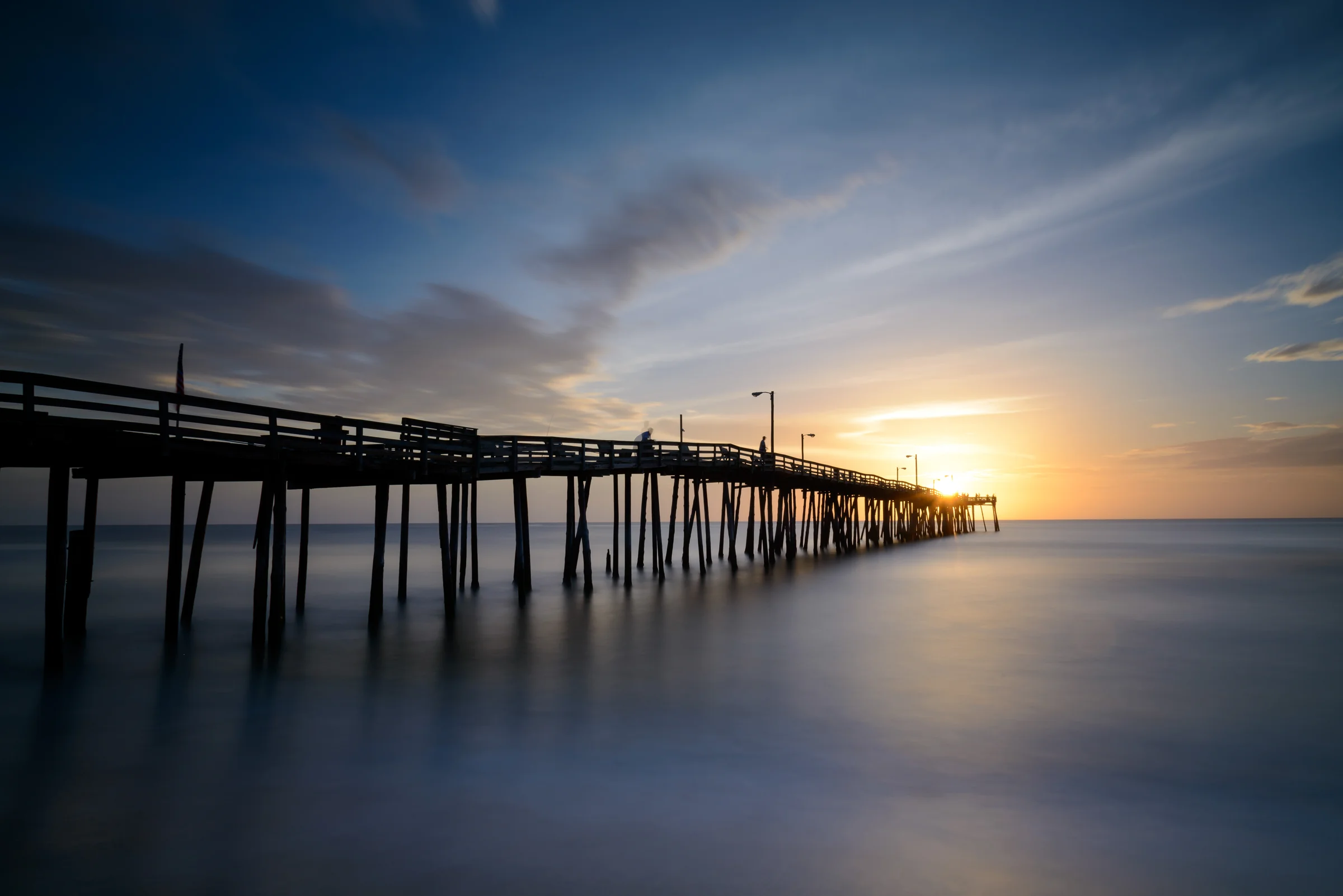
Nags Head
Rental pricing data loading…
“Classic OBX beach town with real depth — big sand dunes, fishing piers, and a dining scene that ranges from a 1946 seafood institution to Food Network-featured spots.”
Classic OBX beach town with real depth — big sand dunes, fishing piers, and a dining scene that ranges from a 1946 seafood institution to Food Network-featured spots. The north end has Gallery Row's art studios and boutiques; the south end gets quiet and wild, where the national seashore begins. It feels like the place that has everything without trying too hard.
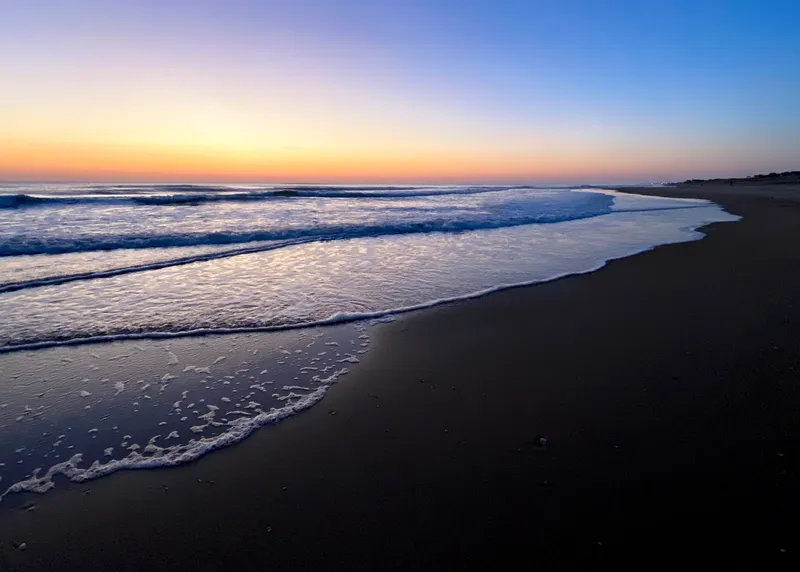
Nags Head is the town that taught the Outer Banks how to be a vacation destination — families have been coming here since the 1800s, and that history shows. It's the rare OBX town where you can climb giant sand dunes in the morning, eat at a restaurant that's been open since 1946, browse original art galleries in the afternoon, and fish off a state-of-the-art pier at sunset. The range is the thing: South Nags Head feels remote and wild, with wide empty beaches backed by national seashore, while the central strip has every restaurant, shop, and activity you could want. Repeat visitors talk about the ritual of the Jockey's Ridge sunset walk, finding their spot on the uncrowded south beaches, and introducing their kids to the same pier and dune climbs they grew up on.
What you'll remember
A Typical Day
Families who want variety — a week here never runs out of things to do, from hang gliding and pier fishing to mini golf and art galleries. Great for groups with mixed ages and interests, since you can split up (teens to the adventure park, grandparents to Gallery Row, parents to the beach) and reconvene for waterfront seafood at sunset. Also excellent for anglers — Jennette's Pier and Oregon Inlet charters are both right here — and for couples who want real dining options without driving to Duck or Manteo. First-timers to the OBX often start in Nags Head because it has the best combination of access, amenities, and iconic landmarks.
US-158 (the bypass) gets congested in peak summer, especially Saturday turnover traffic. The town is 12 miles long, so you'll drive to most things even if they're technically in Nags Head. Some of the commercial strip along the bypass feels more like a highway corridor than a beach town.
Rental Pricing Guide
Median weekly · Peak summer (Jun–Aug)Full Scorecard
Right Now
Things to Do
Before You Go
Jockey's Ridge State Park: Complete Visitor Guide
Everything you need to know before visiting the tallest living sand dune system on the Atlantic coast — trails, hang gliding, timing, and what most visitors miss.
Park Hours & Access
Jockey's Ridge is free — no entrance fee, no reservations. The main access is at MP 12 on US 158 with a large parking lot, visitor center (9 AM-5 PM October-March, 9 AM-6 PM April-September), and restrooms. The sound-side access on Soundside Road is smaller and quieter, with its own parking area and an approximately 1-mile loop trail to the Roanoke Sound shore.
The Dunes: What to Expect
The main dune rises 80–100 feet above sea level and shifts with the wind — it's a living system, not a fixed landmark. From the top you can see the Atlantic to the east and Roanoke Sound to the west. The Tracks in the Sand trail from the main access leads to the dune ridge as a loop of approximately 1.2 miles. There's no shade, no water, and no defined path once you're on the sand. It's a real climb, not a boardwalk stroll.
Hang Gliding with Kitty Hawk Kites
Kitty Hawk Kites has been running hang gliding lessons here since 1974 — it's the largest hang gliding school in the world. Beginner lessons are 3 hours long and include ground school plus 5 solo flights off the dunes. You launch from the soft sand slopes, so landings are forgiving. Available year-round, ages 4 and up.
Sandboarding & Kite Flying
Sandboarding is allowed and no permit is required. Kitty Hawk Kites rents sandboards at the hang gliding facility near the visitor center. Kite flying is one of the most popular activities — the steady ocean breeze makes it one of the best kite-flying spots on the East Coast. Kites are sold at the Kitty Hawk Kites retail store across from the park entrance.
The Sound-Side Access (Don't Skip This)
Most visitors only see the main dune. The sound-side access on Soundside Road leads to a quiet Roanoke Sound shoreline — shallow, warm water, no waves, no crowds. It's the best sunset spot in the northern OBX. Also the primary launch point for kiteboarders and windsurfers in the area. The approximately 1-mile Soundside Nature Trail loop passes through maritime shrub thicket before opening onto the sound.
Full park info, trail maps, and seasonal programs
NC State Parks — Jockey's Ridge →Nags Head Fishing: Three Piers + Oregon Inlet Charters
Three ocean piers within town limits and 45+ charter boats 15 minutes south — Nags Head has one of the best fishing setups on the entire OBX.
Jennette's Pier (MP 16.5)
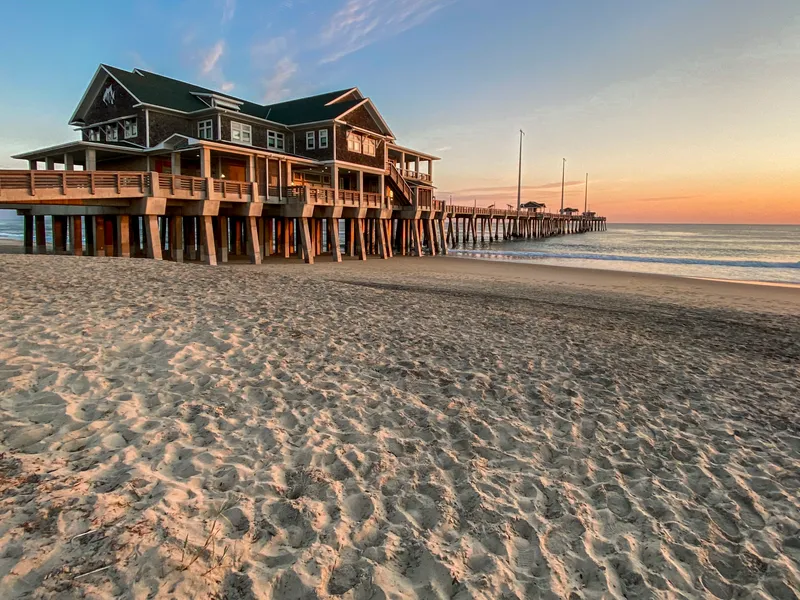
The flagship. Run by NC Aquariums, this 1,000-foot concrete pier is the longest on the OBX and the only one open year-round. The pier house has aquarium exhibits including a 52,000-gallon tank, a tackle shop, and rod rentals. A blanket fishing license covers everyone on the pier — you don't need to buy your own. Jennette's draws the most anglers and the most species, including cobia and king mackerel from the end.
Nags Head Fishing Pier (MP 11.5)
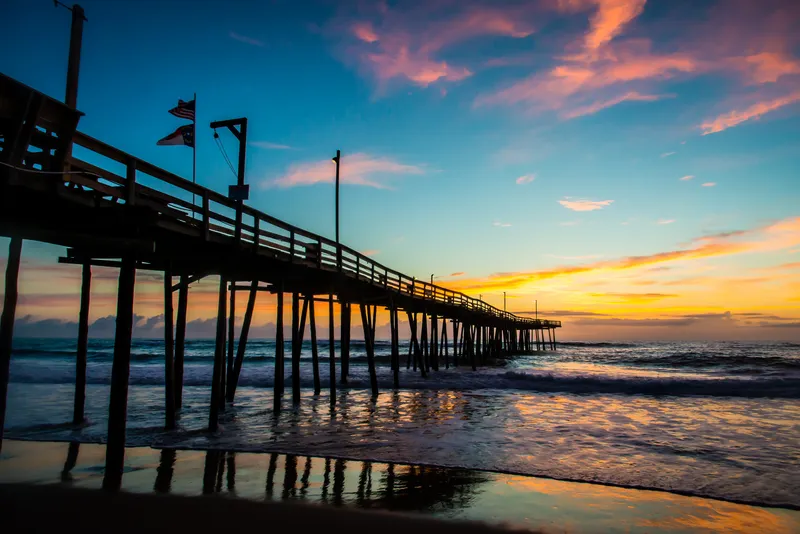
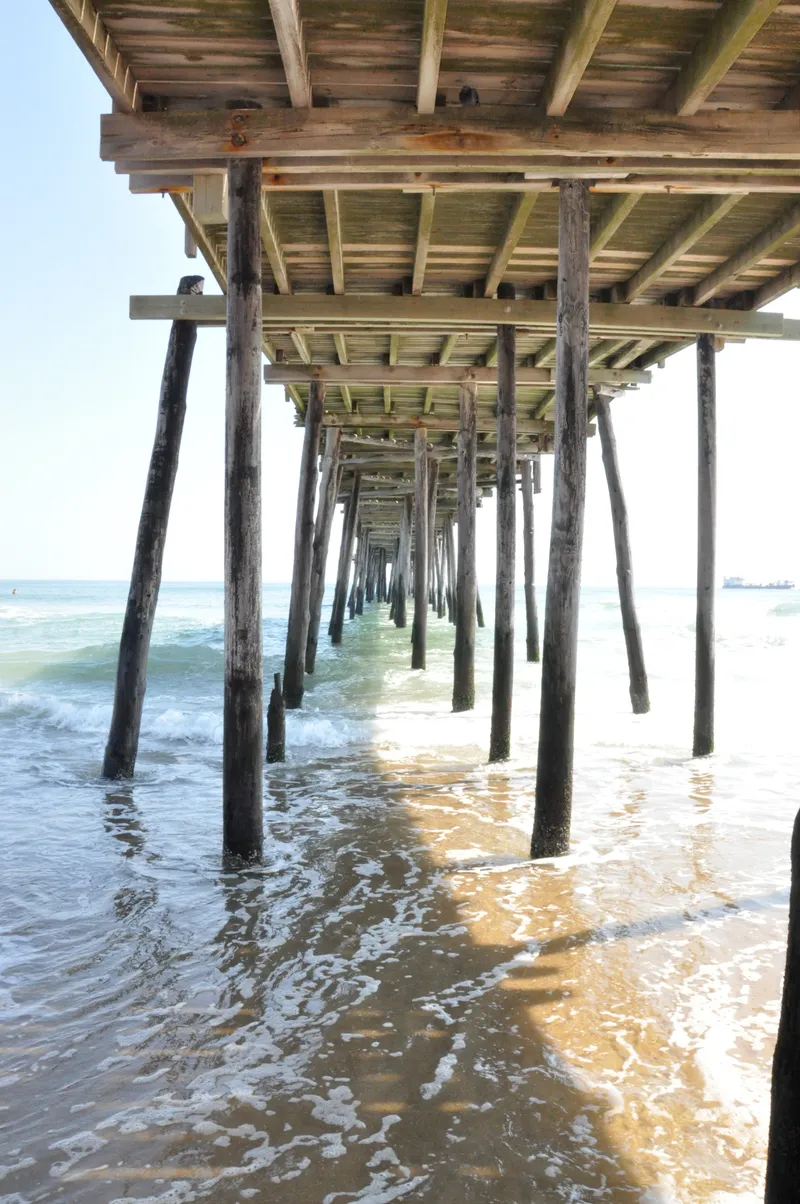
A classic wooden pier with a solid tackle shop, restrooms, and a less crowded feel than Jennette's. Runs summer fishing tournaments. Good for families who want a quieter pier experience without the crowds. Seasonal operation — typically April through November.
Outer Banks Fishing Pier (MP 18.5)
About 600 feet long, at the south end of town near Fish Heads Bar & Grill. This is the laid-back option — an old-timey, slow-lane vibe that attracts regulars who prefer fewer crowds. You'll catch the same surf species plus cobia, kingfish, false albacore, and black sea bass. Fish Heads' tiki bar is right there when you're done.
Oregon Inlet Fishing Center (~15 min south)
The OBX's main charter hub sits just across the Bonner Bridge at the northern tip of Hatteras Island. Over 45 charter boats run offshore and inshore trips from here. Offshore trips target Gulf Stream species — blue marlin, yellowfin tuna, mahi-mahi, wahoo. Inshore and nearshore trips go for red drum, cobia, flounder, and striped bass. Captain's license covers your fishing license on charter trips.
What's Biting When
Nags Head has year-round fishing, but species rotate with the seasons. Spring brings the first cobia runs and red drum activity picks up. Summer is peak variety — king mackerel, Spanish mackerel, flounder, bluefish, and the offshore Gulf Stream species. Fall is the best fishing of the year: big red drum in the surf (Sep–Nov), yellowfin tuna offshore, and king mackerel stacking up. Winter is quiet on the piers but giant bluefin tuna (500+ lbs) appear offshore December through February.
Licenses & Gear
NC Coastal Recreational Fishing License required for ages 16+ when fishing from the beach or a boat. Pier fishing is exempt — the pier's blanket license covers you. Charter boats also cover your license. Non-resident 10-day license is $14 from deq.nc.gov (NC Division of Marine Fisheries). All three piers have tackle shops with bait, rigs, and rod rentals.
Daily fishing reports and pier conditions
Jennette's Pier — NC Aquariums →Nags Head Woods: Trail-by-Trail Hiking Guide
Over 1,200 acres of maritime forest with approximately 8 miles of trails, an audio tour about the families who once lived here, and a sound-side beach most visitors never find.
What You're Walking Into
Behind the dunes and vacation rentals, Nags Head Woods is one of the best-preserved maritime forests on the Atlantic coast. The Nature Conservancy protects over 1,200 acres of wooded dunes, freshwater ponds, swamp forest, and salt marsh. Hundreds of plant species and more than 150 bird species live here — at least 50 of which nest here — including herons, pileated woodpeckers, red-shouldered hawks, and in spring, migrating warblers. Live oaks over 100 years old line the ridges. It feels nothing like the beach town a quarter mile away.
Easy Trails (Under 1 Mile)
Three short loops near the parking area are good for families with small kids, anyone with mobility concerns, or a quick break from the beach.
Moderate Trails (1–2.5 Miles)
These trails get you deeper into the preserve and show more ecological variety — from dense forest canopy to salt marsh to the Roanoke Sound shoreline.
Strenuous Trail
One longer loop for hikers who want the full experience.
Wildlife & What to Watch For
The preserve sits on the Atlantic Flyway, so spring (April–May) and fall (September–October) bring migratory warblers, thrushes, and raptors. Year-round residents include pileated woodpeckers, red-shouldered hawks, great blue herons, and river otters in the ponds. White-tailed deer are common. In spring, listen for spring peepers and chorus frogs in the freshwater ponds. Mosquitoes are fierce from May through September — DEET or picaridin is non-negotiable.
Practical Notes
No bikes, no swimming in the ponds. Dogs on leash are permitted on 4 trails only: Discovery, Roanoke, ADA, and Town trails. Dogs are not allowed on Center, Sweetgum Swamp, or Blueberry Ridge trails. Stay on marked trails — the ecosystem is fragile. Ticks are present year-round, especially in tall grass along trail edges. There are no restrooms on the trails — the nearest facilities are at the info center parking area. Bring water; there's no potable water source on the trails.
Trail map, preserve info, and audio tour access
The Nature Conservancy — Nags Head Woods →Photos