Carova / 4x4 Beaches
Rental pricing data loading…
“Eleven miles of wild beach where the only traffic is horses and the occasional 4WD.”
Eleven miles of wild beach where the only traffic is horses and the occasional 4WD. The houses are surprisingly large and luxurious — private pools, hot tubs, ocean-view decks — but step outside and you're in an untamed landscape of dunes, ocean, and wide-open sky. After dark, the absence of streetlights and commercial development turns the beach into one of the best stargazing spots on the East Coast.
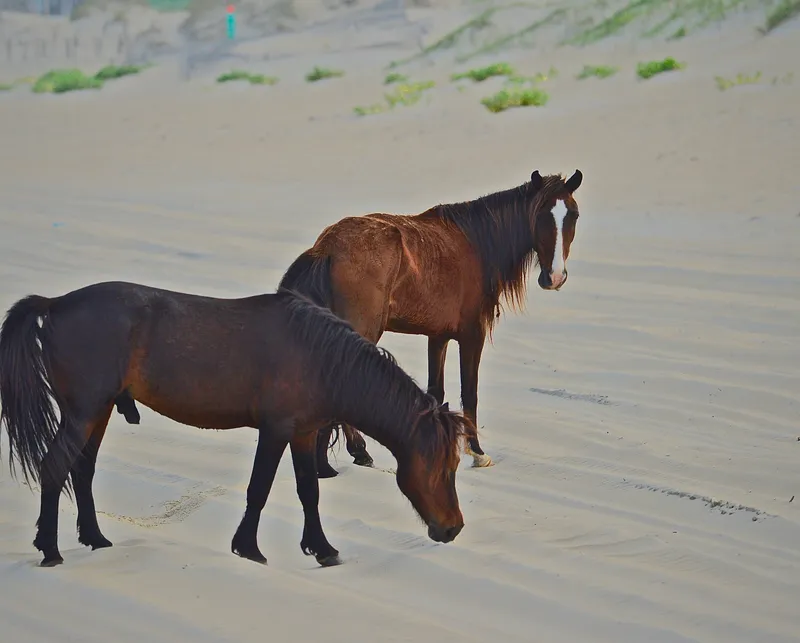
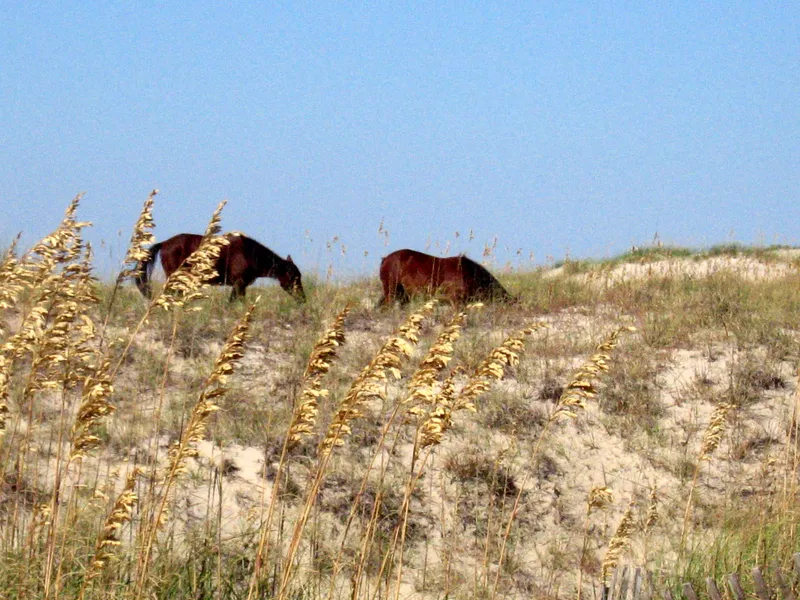
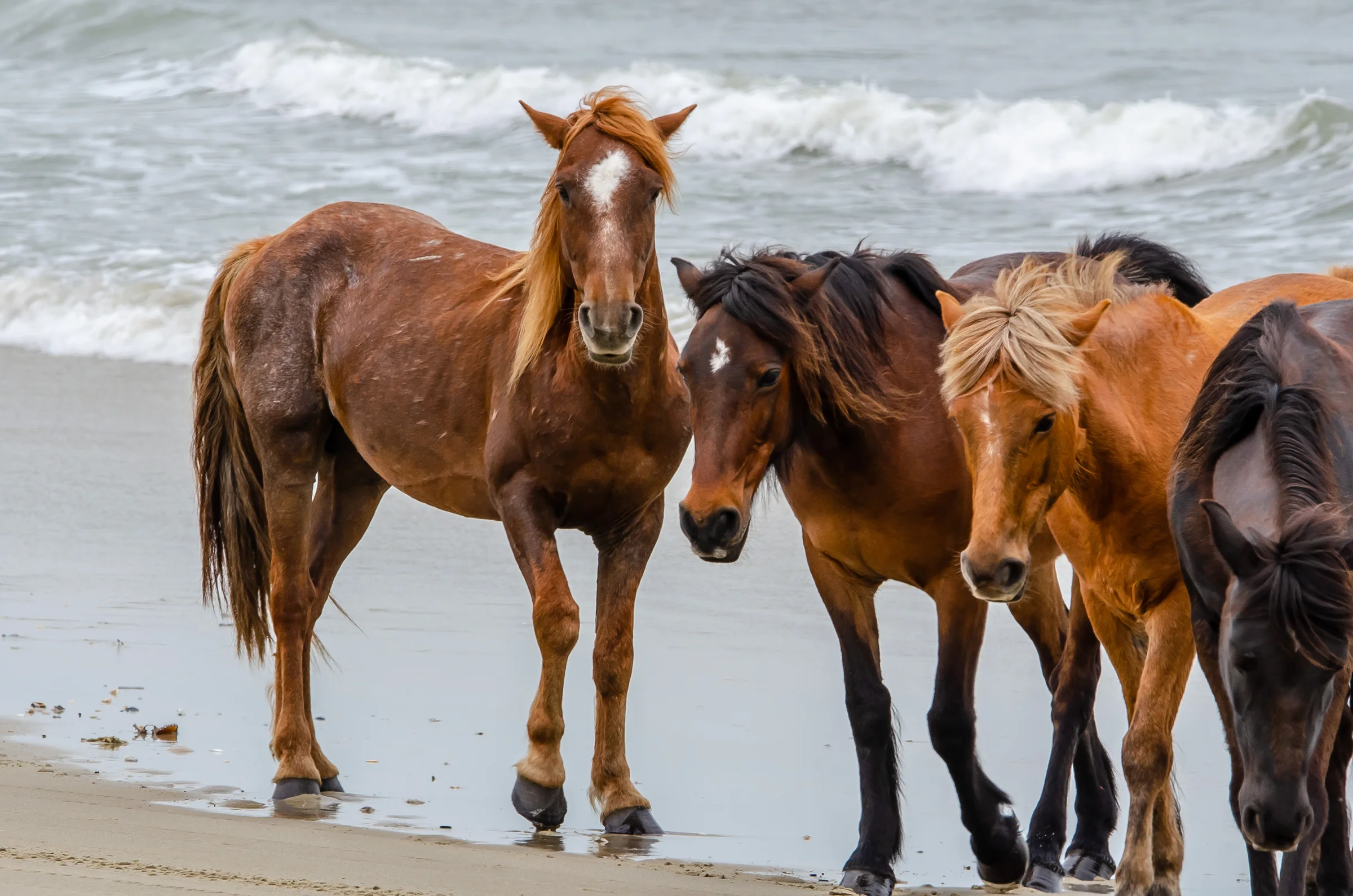
People come to Carova for the experience of being truly unplugged on a wild stretch of coast. The houses are big and often luxurious — private pools, hot tubs, game rooms, ocean-view decks — but the landscape outside is completely untamed. About 100 Colonial Spanish Mustangs roam freely across 11 miles of beach and dunes, and spotting them from your deck or on a morning beach drive is the kind of moment families talk about for years. Repeat visitors — and there are many who've been coming 15 or 20 years — talk about the ritual of airing down the tires, the thrill of the first beach drive north, and waking up to find horses grazing in the dunes outside the window. It's the kind of place where a week feels like a real escape, not just a change of scenery.
What you'll remember
A Typical Day
Families and friend groups who want a week that feels like an adventure — driving on the beach, spotting wild horses, fishing from your own stretch of sand, and gathering in a big house with a pool at the end of the day. The large rental homes (many with 5-9+ bedrooms, private pools, and hot tubs) are built for multi-family trips where three generations split the cost and the kids roam free. Also excellent for couples who want total quiet and zero crowds, and for surf fishing enthusiasts who want uncrowded beach access. Plan to cook every meal — most visitors treat it as part of the fun, grilling fresh-caught fish or loading up the kitchen before heading north.
You need a real 4WD vehicle — AWD sedans and crossovers get stuck regularly, especially at high tide when the beach narrows. Stock up on groceries before you head north because the nearest Food Lion (Corolla, ~25 min drive) gets cleaned out on Saturday turnovers. Cell service works near the fire station tower but gets unreliable farther north, and there's no WiFi unless your rental provides it.
Rental Pricing Guide
Median weekly · Peak summer (Jun–Aug)Full Scorecard
Right Now
Things to Do
Before You Go
4WD Beach Driving Guide
Everything you need to know before driving onto the sand — vehicle prep, tire pressure, driving techniques, and what to do when you get stuck.
Before You Hit the Sand
Access the 4WD beaches via the sand ramp at the northern end of NC Highway 12 in Corolla. Street-legal 4WD vehicles only for visitors — ATVs and UTVs are restricted to Currituck County residents and property owners who can obtain annual permits. Your vehicle must be 4WD with decent ground clearance (7.5 inches strongly recommended). AWD crossovers technically work, but get stuck regularly. If you're renting a vehicle, confirm it's true 4WD before you book.
Tire Pressure Is Everything
This is the single most important thing you'll do. Before driving onto the sand, air down all four tires to 18-20 PSI. Lower pressure spreads the tire's contact patch, keeping you on top of the sand instead of digging in. Most people who get stuck either didn't air down enough or forgot entirely. Use a low-pressure tire gauge (standard gauges aren't accurate below 20 PSI). Free air-up stations are at Historic Corolla Park (1100 Hunt Club Dr) — always re-inflate before driving on pavement, as aired-down tires on asphalt damages them and affects handling.
Driving Techniques
Stay in established tire tracks whenever possible — packed sand is easier to drive on. Near the waterline, the sand is firmest at mid to low tide. Avoid the soft, dry sand above the high-tide line unless you're accessing a house. Keep steady momentum through soft patches — don't stop or make sharp turns. If you feel the tires start to spin, ease off the gas rather than flooring it. Turn off traction control, which fights you in sand by cutting power when tires slip. From the Friday before Memorial Day through Labor Day, between 9 AM and 5 PM, vehicles must use the driving lanes next to the dune line between mileposts 14.5 and 17.
When You Get Stuck
It happens to everyone eventually, including locals. First: don't spin your tires. That digs you deeper. Let more air out (down to 12-15 PSI if needed), clear sand from around all four tires with a shovel, and try to back out the way you came in. A tow strap is essential — other drivers on the beach will often pull you out if you have one. If self-recovery fails, call a towing service. North Beach Recovery (252-453-0573) specializes in beach extractions and has been operating since 1994. Carova Beach Towing (252-619-3633) is another option. Expect to pay $150-$300+ depending on how stuck you are and how far north.
What to Carry in Your Vehicle
Beyond the shovel and tow strap: a low-pressure tire gauge, portable air compressor, full-sized spare tire (not a donut — those don't work on sand), a jack with a support board (jacks sink in sand without one), and a flashlight. Keep your gas tank full — there are zero gas stations in the 4WD area. The nearest is in Corolla, and from far north Carova that's 20+ minutes of beach driving.
Full beach driving rules and permit purchase
Currituck County Beach Driving & Parking →Packing & Provisioning Guide
There are zero stores, restaurants, or gas stations in Carova. Everything you need for the week has to come with you or be fetched on a 20-minute beach drive to Corolla.
Harris Teeter (601 Currituck Clubhouse Dr, Corolla) opens at 7 AM. Food Lion (805 Ocean Trail, Corolla) is the other option. Shop before you cross onto the sand — loading a week's groceries into a hot car and beach-driving back is miserable. Saturday turnover days pick Food Lion clean by noon.
No gas stations north of Corolla. From far north Carova, the nearest pump is a 20+ minute beach drive south. Keep above half a tank if you're making daily beach runs.
You'll need coolers for the beach since your house fridge is 100+ yards away. There's no convenience store for ice runs — buy bags at Harris Teeter and keep a stash in the freezer.
Nearest pharmacy is in Corolla (~20 min). Nearest urgent care is Lighthouse Medical Care in Corolla ((252) 597-1157, seasonal hours). Nearest ER is OBX Health in Nags Head, 55 minutes away. Bring everything you might need, including children's fever reducer and Benadryl.
OBX sun is intense, especially with sand and water reflection. Mosquitoes and no-see-ums are aggressive on calm evenings, particularly sound-side. Stock up — you can't run to a drugstore.
Shovel, tow strap, low-pressure tire gauge, portable air compressor, full-size spare tire, jack with support board. Non-negotiable.
Rental homes have running water, but power outages happen during storms and well pumps stop working. Keep a case or two of bottled water as backup.
No streetlights in Carova. Walking to the beach at night, finding your house from the road, or dealing with a power outage all require a flashlight. Headlamps are even better.
Cell service is spotty to nonexistent in parts of Carova. WiFi depends on your rental. Bring books, board games, card games, and downloaded movies/shows. Kids will need non-screen entertainment for at least some of the trip.
You're cooking every meal. Most houses have grills but don't always supply fuel. Confirm with your rental company and bring your own to be safe.
Some rentals provide them, some don't. You'll generate a lot of kitchen trash cooking three meals a day for a big group. Bring a full box.
Cell service can be unreliable. Save key numbers before you lose signal: rental company, towing services (North Beach Recovery: 252-453-0573), Currituck County non-emergency (252-232-2216). A few Corolla pizza places deliver to the 4WD area — get those numbers from your rental company.
Twiddy's 4x4 vacation guide has additional provisioning tips specific to their rental properties.
Twiddy 4x4 Vacation Guide →Wild Horse Viewing Guide
Around 100 Colonial Spanish mustangs roam freely through Carova and the northern beaches. Here's how to find them, watch them safely, and decide whether a guided tour is worth it.
About the Herd
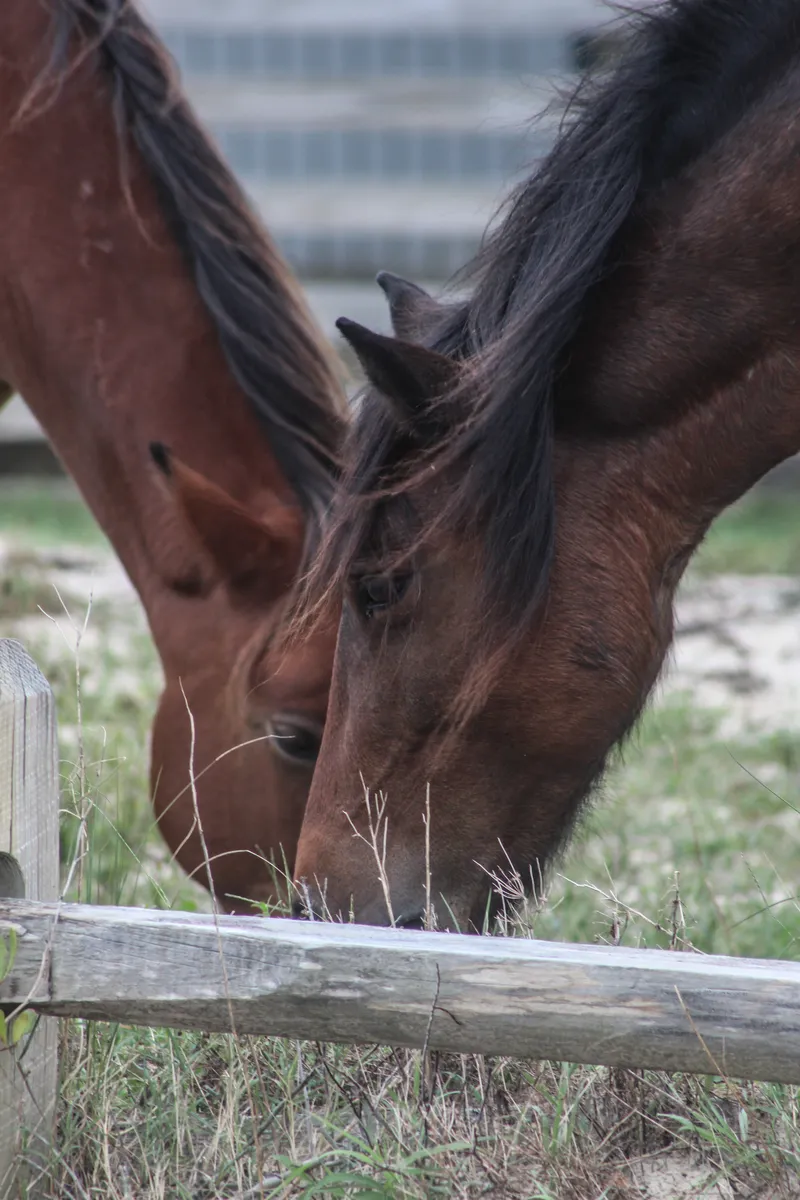
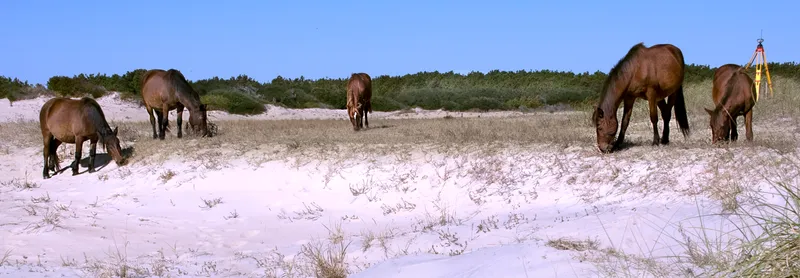
The Corolla wild horses are Colonial Spanish mustangs, descendants of horses brought to the Outer Banks by Spanish explorers in the 1500s. Around 100 horses live in small harems — typically a stallion plus 1-4 mares (2-5 animals total) — across roughly 7,544 acres of beach, dunes, and maritime forest between Corolla and the Virginia border. They're managed and protected by the Corolla Wild Horse Fund, founded in 1989 and incorporated as a 501(c)(3) nonprofit in 2001. The herd is one of the oldest documented wild horse populations in North America.
Finding Horses on Your Own
If you're staying in Carova with a 4WD vehicle, you can look for horses yourself at no cost. Horses are most active in early morning and late evening — they graze in the dunes, wander through residential areas, and sometimes walk right down the beach. In summer, they're more visible on the beach and in open areas. In winter, they retreat into the maritime forest and are harder to spot. Drive slowly along the beach and interior sand roads, scanning the dune line and yards. Sightings aren't guaranteed on any given drive, but most visitors staying a full week in Carova see horses multiple times.
The Rules (They're Enforced)
Stay at least 50 feet away at all times. Do not feed, touch, chase, or approach the horses — it's illegal under Currituck County ordinance and punishable by law. Horses that become habituated to humans get hit by vehicles and eat dangerous food. If a horse approaches you, back away. Do not leave food, apple cores, or watermelon rinds outside — horses will eat them, and non-native foods cause digestive colic, which can be fatal. Keep dogs leashed; stallions are territorial and will charge. If you see a horse that appears sick, injured, or in distress, call the Corolla Wild Horse Fund at 252-453-8002.
Guided Tour Operators
If you want a higher chance of seeing horses (or don't have a 4WD vehicle of your own), several companies run 2-hour guided tours from Corolla in open-air safari-style vehicles. Tours cover about 25 miles of off-road terrain and guides know where the harems tend to be. Sightings aren't guaranteed but are common — tours typically encounter 20-30 horses. Book at least 1-2 weeks ahead in summer.
Tour vs. Self-Guided: Which to Pick
If you're staying in Carova with your own 4WD, you'll likely see horses just going about your week — on the beach, in the dunes near your house, or during supply runs. A guided tour adds value if you want the historical context, if you're visiting for just a day trip, or if you want to maximize sightings in a short window. For a week-long Carova stay, you probably don't need a tour, but the kids might love the safari-style vehicles.
The Corolla Wild Horse Fund manages the herd and runs educational programs.
Corolla Wild Horse Fund →Photos